Top 10 Places to Visit in Shimla Best Time to Visit & Complete Travel Guide (2026)
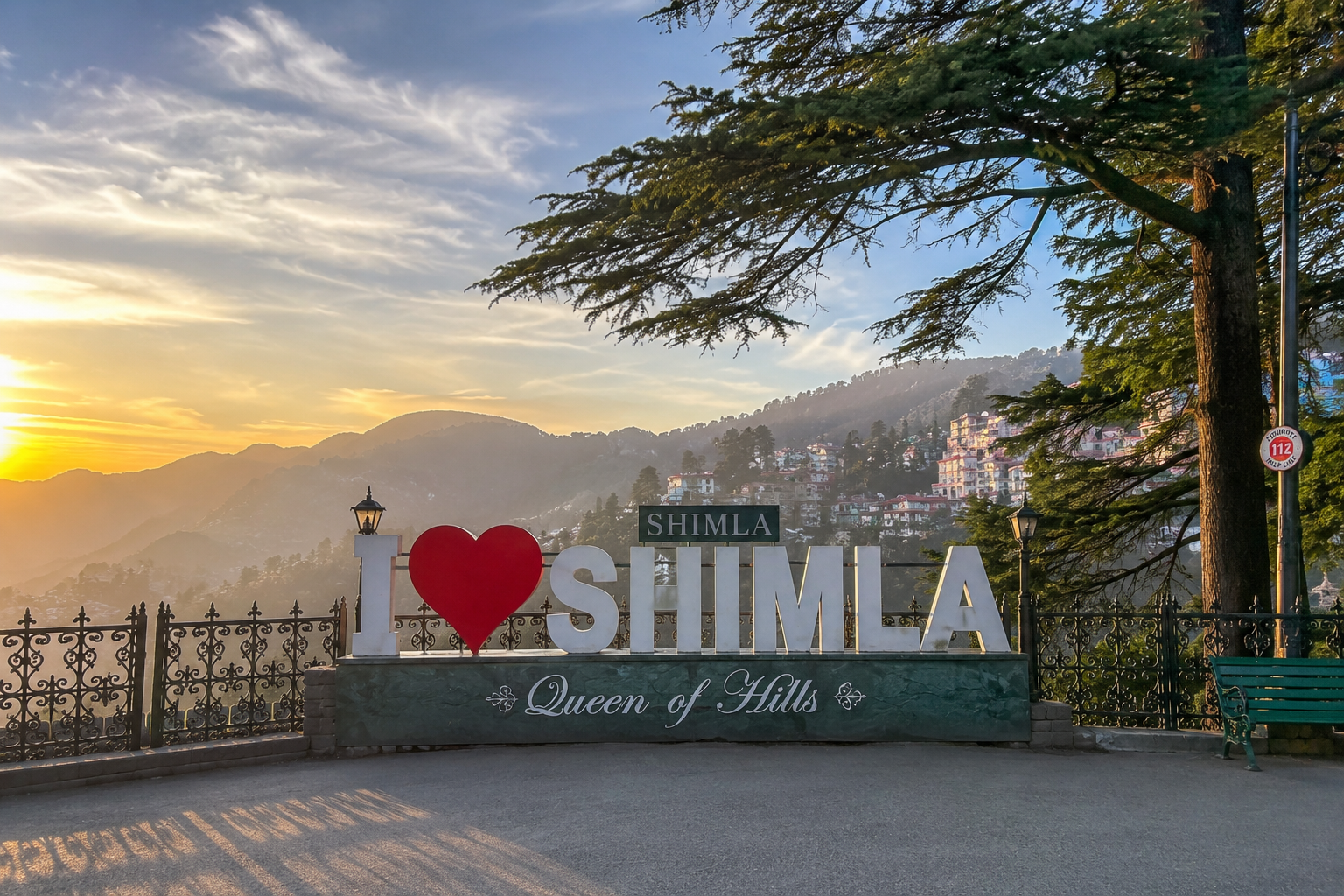
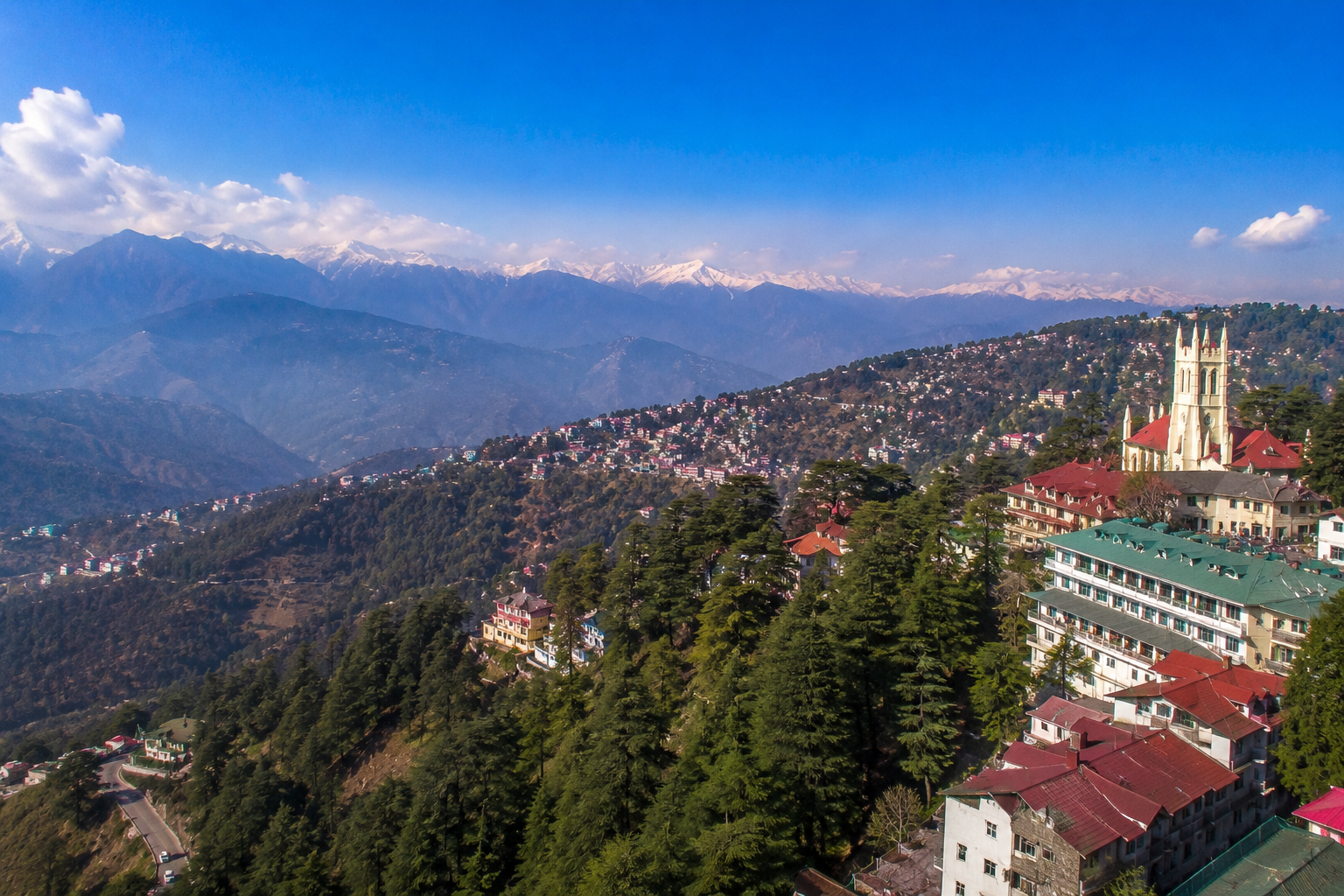
There is something about Shimla that gets under your skin. Maybe it is the cool mountain air hitting your face the moment you step off the train. Perhaps it is the way the town climbs up and down the ridge, as if it were never really planned, but rather grew organically over 200 years of stories. Or maybe it is simply the view: ridge after pine-covered ridge disappearing into a blue Himalayan haze.
Once the summer capital of British India, Shimla today is Himachal Pradesh’s busiest hill station and one of the most rewarding weekend escapes from Delhi, Chandigarh, or Ludhiana. Whether you’re planning a short holiday or looking for the best Shimla Tour Packages, this guide covers everything you need to know, from the top attractions and the best time to visit to practical travel tips and local experiences.
Top 10 Places to Visit in Shimla
1. The Ridge & Mall Road
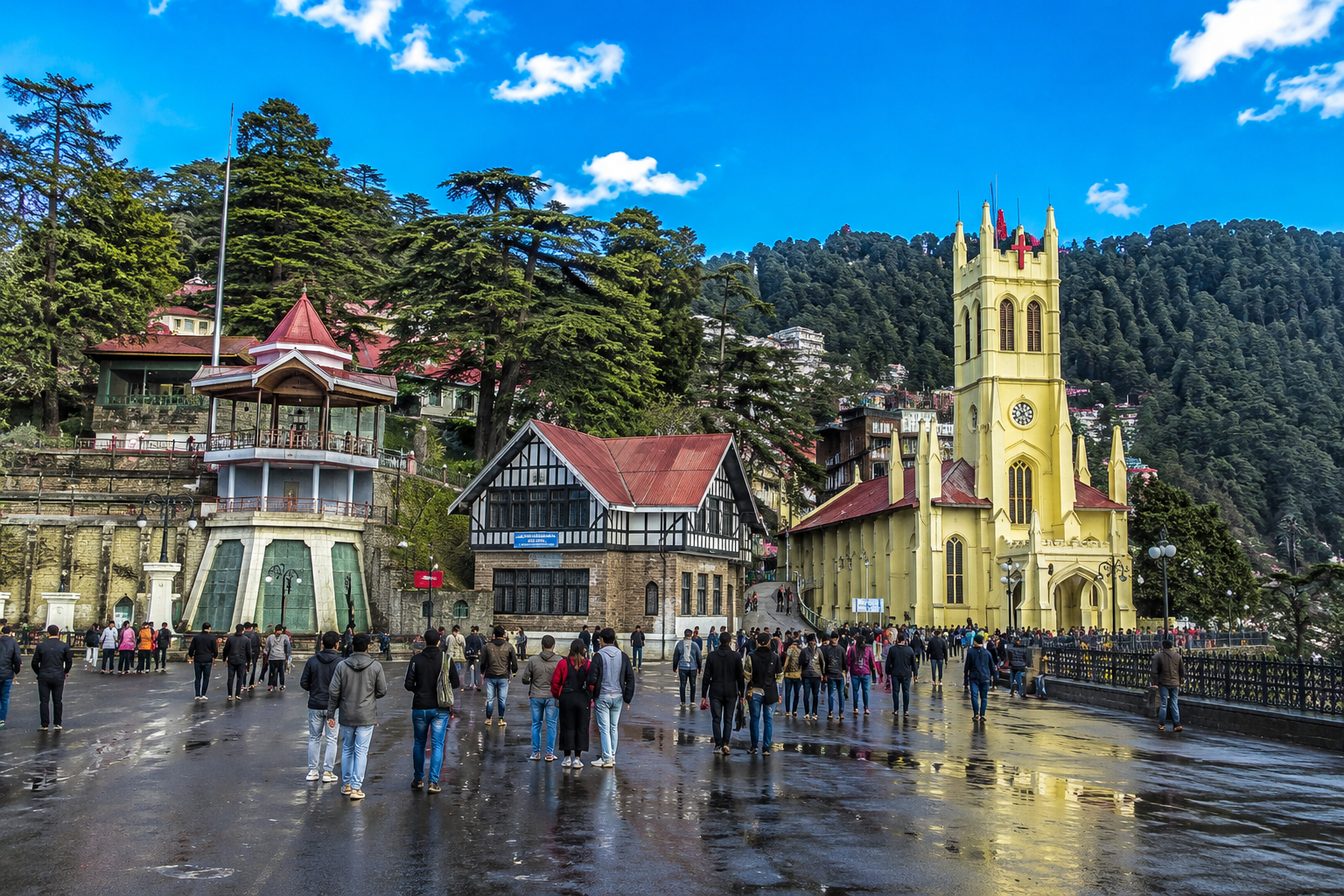
This is where Shimla breathes. The Ridge is a large open promenade stretching across the heart of town, with the Gothic spire of Christ Church rising above everything like a compass needle. On a clear morning, you get a jaw-dropping panorama of the Himalayan ranges.
Mall Road runs parallel below the Ridge and is Shimla’s commercial spine with restaurants, bakeries, local shops selling Himachali woolens and handicrafts, and more than a few chai stalls tucked into corners. Cars are banned on both stretches, which makes the evening walk genuinely pleasant.
Tip: Walk down to Scandal Point at dusk. This is where the Ridge meets Mall Road, and the lighting at golden hour is spectacular. It is also the best spot to pick up a hot corn cob from the local vendors.
2. Kalka-Shimla Toy Train (UNESCO Heritage)
If there is one experience in Shimla that sits entirely in a category of its own, it is this 96 km narrow-gauge railway that has been running since 1903. The train loops through 103 tunnels, crosses 889 bridges, and climbs nearly 1,500 metres over five and a half hours.
The scenery of dense oak and rhododendron forests, deep gorges, and tiny mountain villages sliding past the window is the kind that makes you put your phone away and just look. The UNESCO heritage tag is well-earned. Even if you are arriving by road, consider taking the toy train one way for the experience.
Tip: Book the Shivalik Deluxe Express for a glass-walled viewing car. It runs only twice daily. Check IRCTC well in advance during peak season as seats vanish fast.
3. Jakhu Temple & Jakhu Hill
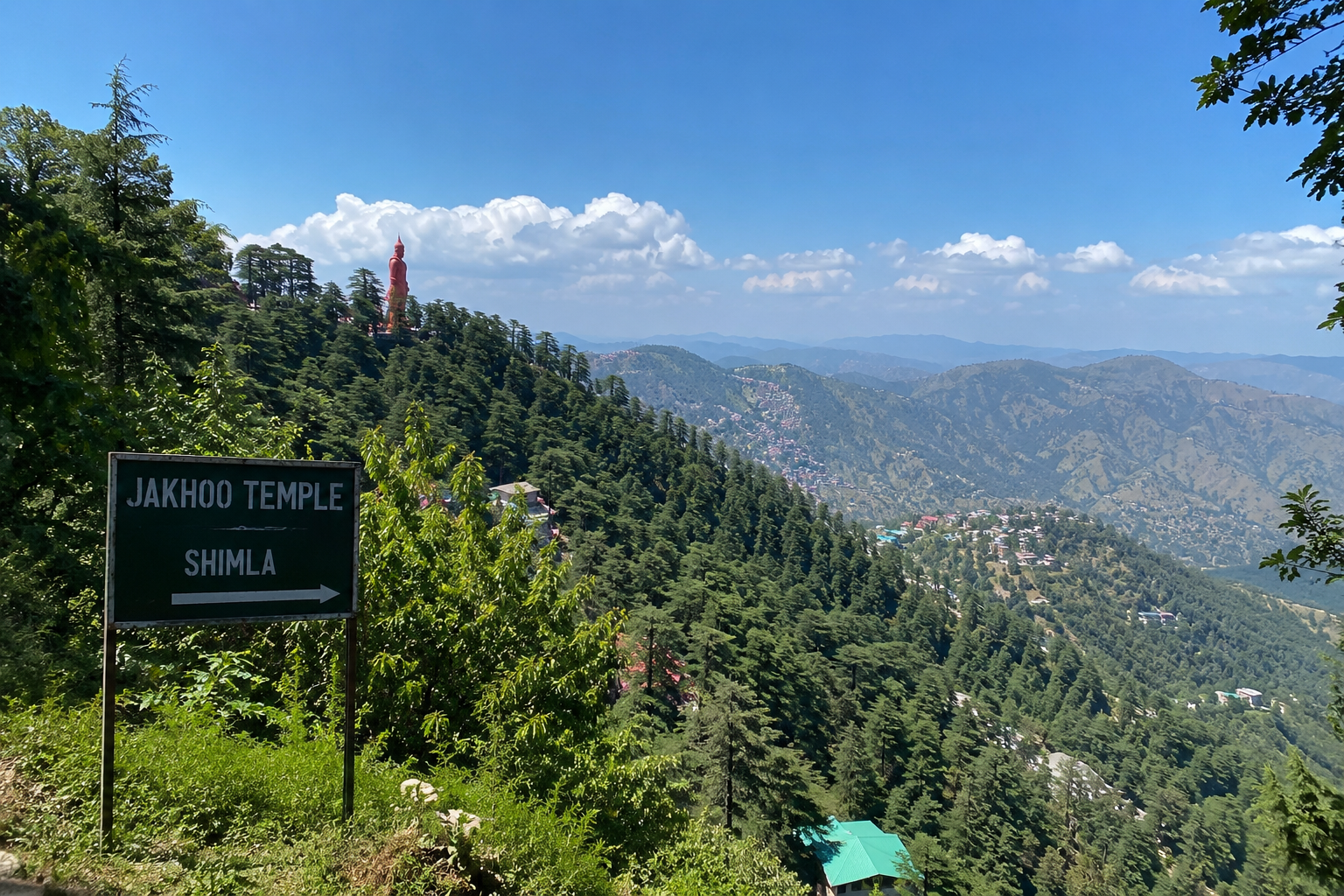
At 2,455 metres, Jakhu is the highest peak around Shimla and the 33-metre Hanuman statue visible from nearly everywhere in town stands here. The ancient Jakhu Temple is believed to be thousands of years old and mentioned in the Ramayana. The place has a genuine spiritual atmosphere even with the crowds.
The 2 km trek from Mall Road takes about 45 minutes through a forest of rhododendrons and oaks. For those who prefer not to walk, ropeways and horses are available. The 360-degree views from the top make every step worth it. Watch your belongings around the resident monkeys.
Tip: Go early in the morning between 7 and 9 AM. The light is golden, the crowds are thin, and you might catch a family of langurs sitting quietly in the trees beside the path.
4. Chail – The Hidden Hill Station
About 45 km from Shimla, Chail deserves far more attention than it gets. Built in 1891 by Maharaja Bhupinder Singh of Patiala after he was banished from Shimla by the British Viceroy, Chail sits at 2,250 metres in thick deodar cedar and pine forests. The Chail Cricket Ground holds the record for being the highest cricket pitch in the world, still in use today.
The Chail Palace, now a heritage hotel, and the surrounding sanctuary with spotted deer make for a genuinely serene day trip. If staying overnight is an option, Chail after the day-trippers leave is one of the quietest nights you can have anywhere in Himachal.
Tip: Stop at Kufri on the way back at 2,622 m for great views and yak rides that children absolutely love.
5. Viceregal Lodge (Rashtrapati Niwas)
This is arguably Shimla’s most impressive building. A massive Tudor Revival mansion built in 1888 as the summer residence of the British Viceroy. It is where India’s partition was decided in 1947, the Simla Accord was signed in 1972, and some of the most consequential decisions of the Raj were made. Today it houses the Indian Institute of Advanced Study and is open for guided tours.
The building is stunning with grey stone, turrets, and arched windows set in beautifully maintained grounds. The interior has retained much of its original Victorian grandeur including a library, ballroom, and period furniture. History enthusiasts will need at least two hours here.
Tip: The garden around the lodge bursts with roses and irises between April and June. Plan your visit during this window if you can.
6. Narkanda & Hatu Peak
About 65 km from Shimla on the Hindustan-Tibet Highway, Narkanda sits at 2,708 metres and is a completely different experience from the urban bustle of Shimla town. From October through February, the place is blanketed in snow. Skiing is available here through HPTDC, and the drive up through apple orchards and dense pine forests is reason enough to come.
Hatu Peak at 3,400 metres offers one of the most expansive Himalayan views in the region on a clear day. You can spot the Kinnaur Kailash range in the far distance. There is an ancient Hatu Mata temple at the summit, and the silence up there reminds you why people come to the mountains.
Tip: January is Narkanda at its snowy best. The Hatu Peak skiing festival usually happens during this period. Check Himachal Tourism’s calendar before you book.
7. Old Shimla – Sanjauli & Lakkar Bazaar
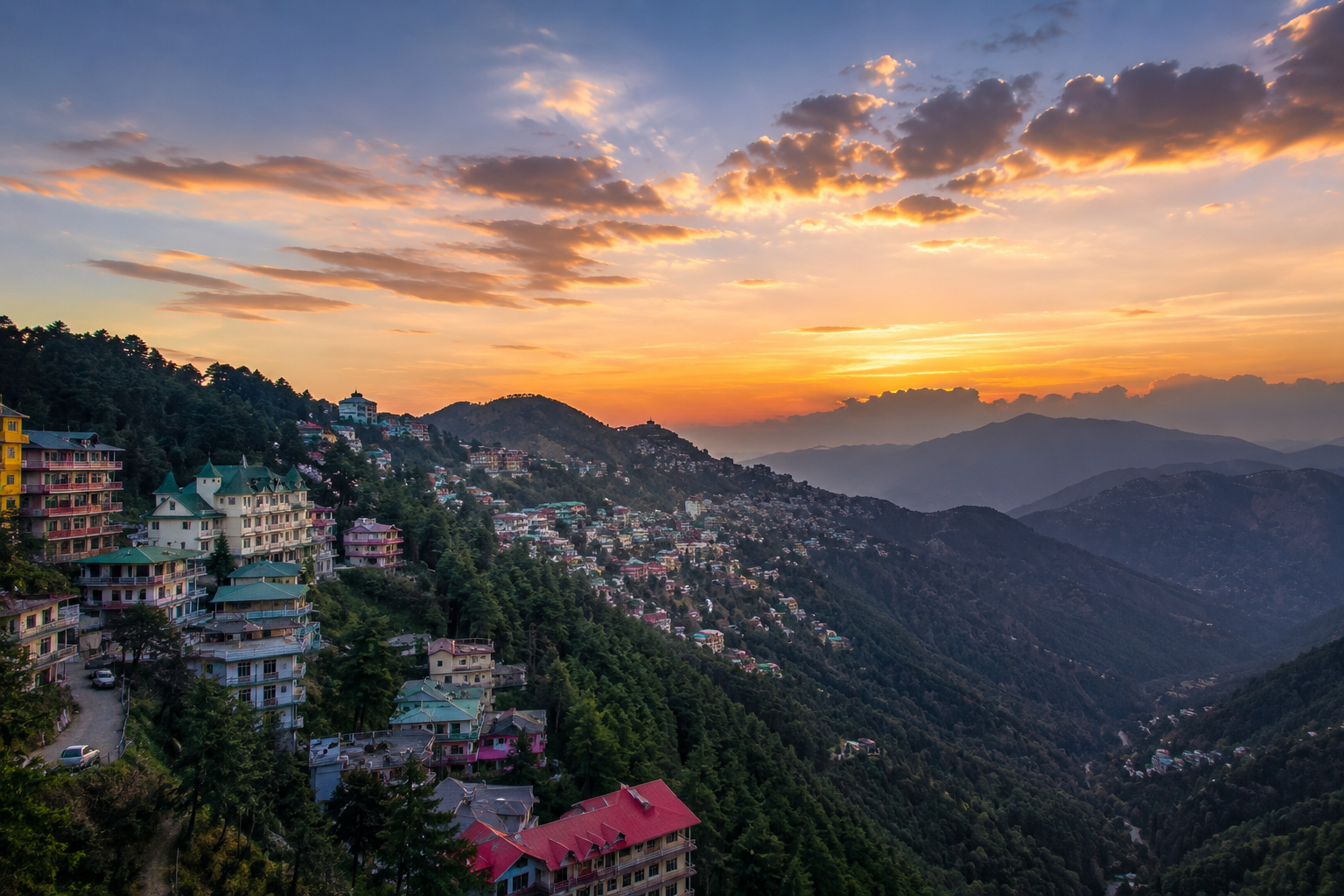
Most visitors stick to Mall Road and miss the actual Shimla. Sanjauli is a residential area with narrow lanes, small temples, and local dhabas serving proper Himachali food at prices that will surprise you. Lakkar Bazaar is Shimla’s wood-craft market where artisans have been carving wooden toys, walking sticks, and decorative items for generations.
A walk through these areas, especially early morning or late evening when the tourist crowds thin out, gives you a completely different understanding of the city. You see the layered architecture of Shimla: colonial, Raj-era, and modern Himachali buildings stacked together on the hillside.
Tip: Try the local siddu, steamed wheat bread stuffed with walnuts and poppy seeds, at a Sanjauli dhaba. It is a Himachali staple that no restaurant on Mall Road makes as authentically.
8. Chadwick Falls
At 67 metres, Chadwick Falls drops through a dense forest of rhododendrons and oaks about 7 km from Shimla centre. The trail passes through real wilderness where you will encounter giant ferns, wild strawberry plants, and if you are lucky, some of the 200+ bird species recorded in the reserve.
The falls are most spectacular between July and September when the monsoon swells them to full force. The hike down takes about 45 minutes and the climb back up reminds you that you are at 2,000 metres. Wear proper shoes, carry water, and give yourself a full half-day.
Tip: The forest road to Chadwick passes through Glen, a beautiful picnic spot in a narrow valley. Pack lunch and spend time here before continuing to the falls.
9. Tara Devi Temple
Sitting on top of a hill about 11 km from the centre of Shimla, the 250-year-old Tara Devi temple is one of Himachal Pradesh’s most important religious sites dedicated to the goddess Tara. The temple is a blend of Bengali and Himachali architecture, an unusual combination that is surprisingly beautiful.
If you are arriving or departing Shimla by road, Tara Devi is practically on the way and makes for a natural stop. The atmosphere during the Navratri festivals in March-April and October is genuinely electric with thousands of devotees making their way up.
Tip: There is a ropeway to the temple that makes the steep climb much easier. At Rs. 50 per person, it is worth every rupee, especially with children or older travellers.
10. Mashobra & Craignano Nature Park
Just 13 km away from Shimla’s crowds, Mashobra is a quiet village at 2,149 metres surrounded by apple and plum orchards, with a thick cedar forest running along the ridge above it. Craignano, a natural reserve within Mashobra, has walking trails through the forest and a small children’s park.
The spring blossom season is from March to May when the orchard’s flower is one of the prettiest sights in all of Shimla district. August and September bring apple-picking season when many orchard owners allow visitors to pick and buy directly, making for a lovely unhurried afternoon.
Tip: August and September bring apple-picking season to Mashobra. Many orchard owners allow visitors to pick and buy directly. A lovely, unhurried afternoon activity.
Best Time to Visit Shimla
Shimla is a year-round destination, but each season offers a genuinely different experience. Here is what to expect.
Summer (March to June)
Temperatures range from 15 to 30 degrees C. This is peak tourist season as the weather is the best in India during this period. Wildflowers are at their best in April and the rhododendron forest blazes red from late February through March. Book hotels at least 3 to 4 weeks in advance.
Monsoon (July to September)
Heavy rainfall, misty mornings, and waterfalls at their peak force. The forests turn a deep, saturated green. Not recommended for road trips through mountain passes, but perfectly fine for Shimla town. Hotels are cheaper and significantly less crowded. Good for budget travellers.
Autumn (October to November)
Crystal-clear air and golden light make these among the most beautiful months in Shimla. Hotel rates drop significantly while the weather remains excellent. Apple harvest season in October adds a wonderful local flavour. This is the best overall window for first-time visitors wanting value and good weather.
Winter (December to February)
Temperatures fall to -4 to 10 degrees C. Snowfall typically starts in late December and peaks in January. If seeing snow is the reason for your visit, mid-January through early February is the most reliable window. Carry proper warm clothing, not just a light jacket. Roads to Narkanda may close during heavy snowfall.
Essential Travel Tips
Getting There
- By Road: 6-7 hours from Delhi via NH44. Well-maintained highway throughout.
- By Bus: Volvo buses from ISBT Kashmere Gate, Delhi. Approx. Rs. 700-1,200. Book on HRTC website.
- By Train: Train to Kalka, then the UNESCO toy train to Shimla. Most scenic option.
- By Air: Nearest airport is Chandigarh, 115 km away, about 3 hours by road.
Where to Stay
- Budget: Guesthouses in Chhota Shimla and Circular Road area. Rs. 500-1,500 per night.
- Mid-Range: HPTDC Peterhof is a good heritage option. Rs. 2,000-4,000 per night.
- Luxury: The Cecil Hotel on Mall Road or Wildflower Hall near Mashobra.
- Always book at least 3 weeks ahead for April-June and December-January.
What to Eat
- Siddu: Steamed wheat bread stuffed with walnuts and poppy seeds. Do not miss this.
- Chana Madra: Chickpeas in yogurt gravy. A true Himachali staple.
- Babru: Black lentil-stuffed fried bread, best eaten hot with tamarind chutney.
- Baljees on Mall Road is iconic for north Indian food. Walk two lanes back for cheaper, better local food.
Budget Planning
- Budget: Rs. 1,500-2,000 per day including guesthouse and local dhabas.
- Mid-Range: Rs. 3,000-5,000 per day with comfortable hotel and good restaurants.
- Mall Road restaurants charge city prices. Go two lanes back for half the cost and more authentic food.
Connectivity and Packing
- BSNL has the strongest mountain coverage. Jio and Airtel work in town but get patchy beyond Narkanda.
- Download offline maps before heading to Chail or Hatu Peak.
- Pack layers for any season. Mornings and evenings cool significantly even in summer.
- Carry comfortable walking shoes. The entire town is built on slopes.
- Sunscreen SPF 50+ is essential. The altitude UV is deceptive.
Suggested 5-Day Itinerary
Day 1 – Arrive and Explore the Town
Arrive, check in, and take a short walk to Mall Road to orient yourself. In the afternoon visit Christ Church and Scandal Point, then explore Lakkar Bazaar to pick up Himachali woolens and wooden crafts. In the evening, catch the sunset from the Ridge and have dinner at Baljees or Cafe Simla Times.
Day 2 – Jakhu Hill and Old Shimla
Leave by 6:30 AM for the early morning Jakhu Hill trek to beat the crowds. Visit the temple at the summit and enjoy the views. In the afternoon, take the guided tour of the Viceregal Lodge, then walk through the old Shimla streets toward Sanjauli. Have dinner at a local dhaba in Sanjauli and try siddu if it is on the menu.
Day 3 – Full Day Trip to Chail
Leave by 9 AM for Chail, a 1.5 hour drive. See the famous cricket ground and walk around the Chail Palace grounds. On the way back, stop at Kufri for views and yak rides. Return to Shimla by 6 PM for a relaxed evening on Mall Road.
Day 4 – Narkanda and Hatu Peak
Drive to Narkanda, 65 km and about 2 hours away. Stop at apple orchards on the way. Visit Hatu Peak and take the short forest trail to the temple at the top for expansive Himalayan views. Either stay overnight in Narkanda or return to Shimla.
Day 5 – Chadwick Falls and Departure
Morning hike to Chadwick Falls, best before the afternoon cloud rolls in. Stop at Tara Devi Temple on the way out and use the ropeway if going with family. Begin the drive back to Delhi or Chandigarh by 3 PM for a comfortable return journey.
Frequently Asked Questions
What is the best time to visit Shimla for snowfall?
December to February is the primary snowfall season, with January being the most reliable month for heavy snow. Snowfall is concentrated in Shimla town, Kufri, and Narkanda. Check Himachal Pradesh weather forecasts a few days before your trip and remain flexible on dates as snowfall cannot be guaranteed.
Is Shimla good for families with young children?
Absolutely. Shimla is one of the most family-friendly hill stations in India. The toy train is a hit with kids, Jakhu Hill has manageable trails, Kufri has horse and yak rides, and the open Ridge is perfect for children to run around. Watch out for steep terrain in some areas as not all parts of town are stroller-friendly.
How many days are enough to see Shimla properly?
Three to four days is the sweet spot for a first visit. This gives you enough time to cover the main sights in Shimla town and do one full day trip to Chail or Narkanda. For Mashobra, Chadwick Falls, and longer treks, plan for five to six days.
What is the best way to get from Delhi to Shimla?
The most popular option is the Volvo bus from ISBT Kashmere Gate, Delhi, bookable on the HRTC website for around Rs. 700 to 1,200. If driving, NH44 to Kalka and then SH22 to Shimla takes 7-8 hours with traffic. For the most memorable journey, take a train to Kalka and then the heritage toy train to Shimla.
Are there good day trip options from Shimla?
Several excellent options within 1-2 hours by road: Chail at 47 km, Kufri at 17 km, Narkanda at 65 km, Mashobra at 13 km, Tattapani at 50 km known for hot springs, and Rampur Bushahr at 130 km for a longer day into Himachal’s apple belt. All are accessible by regular vehicles in summer and autumn without needing 4WD.
Shimla is Waiting for You
From the first whistle of the toy train pulling into Shimla station to the last cup of chai on a misty Ridge evening, this hill town has a way of making you slow down. Plan the trip. The mountains do the rest.